Architect, Building Designer or Draftsperson: Who Should You Hire in Australia?
Paying for house plans does not guarantee that the fee includes planning approval documents, consultant coordination or construction support. Before choosing an architect, building designer or draftsperson, establish what the project requires, who may legally provide it and who will remain accountable when questions arise.
Architects, building designers and draftspersons are not interchangeable in Australia
Architects hold a regulated professional title across Australia, while rules for building designers and draftspersons vary by jurisdiction and work type.
What is the practical difference between an architect, building designer and draftsperson in Australia?
| Role | Title and pathway | Common scope | Checks |
|---|---|---|---|
| Architect | Protected title; recognised qualification, examination and registration pathway | Design, approvals, documentation, coordination and potentially construction services | Registration, experience, scope and insurance |
| Building designer | Requirements vary by jurisdiction and work type | Residential design, documentation and sometimes coordination | Licence class, permitted work, experience and insurance |
| Draftsperson | Generally an occupational description; restrictions depend on the work | Drawings based on an established design or brief | Responsibility for design, compliance, approvals and insurance |
A professional title does not define the full residential service
NSW regulates architects through the Architects Act 2003, Architects Regulation 2017 and its professional conduct code. Queensland provides practising and non-practising architect registration; eligibility requires recognised qualifications and fitness to practise. Most provisions of Queensland’s Architects Act 2002 commenced on 1 January 2003. These legal frameworks do not make every architect suitable for every house, so move from professional labels to the rules applying where the property stands.
Australian registration and licensing rules must be checked before appointing a designer
Check the rules where the property is located, not where the practitioner advertises or maintains an office.
Only registered practitioners may use the title architect where Australian architects legislation applies
Architect registration boards operate in every Australian state and territory. Search the relevant public register for the individual and, where applicable, the practice entity, current status and conditions. Business registration or professional-association membership does not replace statutory registration.
Victoria regulates architects through the Architects Act 1991, Architects Regulations 2015 and a professional conduct code. NSW has a corresponding statutory framework, and the Victorian and NSW boards administer compliance in their jurisdictions, as summarised in the ARBV regulatory background. Victoria limits the protected title to registered individuals, companies and partnerships and encourages consumers to check its register. Victorian statutory registration began in June 1923 following legislation passed in 1922. An ARBV page published in October 2023 reported more than 6,500 registered architects, partnerships and companies, but that historical figure is not a live register count.
The Queensland Architects Act 2002 establishes the Board of Architects of Queensland and frames registration as a public-protection measure. Only an individual may apply for registration under that Act. Qualification pathways include recognised Australian qualifications, assessed overseas qualifications or specified assessment programs, together with an approved practice examination.
When must a building designer or draftsperson hold a licence or registration?
Use this matrix as a preliminary risk check, then confirm current requirements with the relevant regulator.
| Location | Check before appointment |
|---|---|
| NSW | Architect register and regulated design duties for relevant apartment or mixed-use work |
| Victoria | Architect register, building-design practitioner category and permitted scope |
| Queensland | Architect register and applicable building-design licence class |
| South Australia | Architect register and project-specific practitioner requirements |
| Western Australia | Architect register and requirements for the proposed work |
| Tasmania | Architect register, designer licensing category and scope |
| ACT | Architect register, construction-occupation and approval requirements |
| Northern Territory | Architect register and relevant building-practitioner registration |
Design responsibility, building approval and certification are separate functions
- Identify who designs and coordinates the documents.
- Record who lodges each planning or building application.
- Confirm which authority, certifier or building surveyor assesses compliance.
- Do not assume the designer certifies construction or warrants the builder’s work.
Legal status clears the first hurdle. The contracted service scope determines what the practitioner must deliver.
The service scope determines what an architect, building designer or draftsperson is accountable for
Accountability follows the written appointment more closely than the consultant’s title.
Which residential design stages can each professional provide?
Check whether the proposal includes:
- Brief and concept: site analysis, room requirements, design options and preliminary cost discussions.
- Planning: application drawings, supporting material and responses to authority requests.
- Developed design: coordinated layouts, materials and specialist consultant input.
- Construction documentation: detailed drawings, schedules and coordination suitable for approval and pricing.
- Tender and construction: tender comparison, builder queries, site observation, variations and completion reviews.
Coordination does not transfer responsibility for structural engineering or other separately commissioned specialist work. The agreement should identify who appoints, briefs and pays each consultant.
Who prepares and lodges planning and building approval documents?
Drawing preparation, lodgement and approval are different tasks. Name the person responsible for each document, the authorised lodging party and the council, certifier, surveyor or authority making the decision. Check exclusions for reports, application fees and responses to further-information requests.
Construction-stage involvement must be expressly included in the appointment
A drawing-only service may finish before builder pricing. If support during construction matters, include site visits, shop-drawing reviews, design changes, progress-claim assessments and builder queries. Periodic observation is not continuous supervision.
Project complexity is a better hiring test than project size alone
A small renovation can require sophisticated architectural design, while a large but conventional house may suit an experienced building designer.
When is an architect the stronger residential choice?
An architect can be the stronger choice for a custom house, heritage renovation, constrained site or project requiring substantial design exploration, planning negotiation, consultant coordination and contract administration. Compare relevant projects, references, budgets and procurement experience rather than relying on reputation alone.
When can a building designer be the appropriate choice?
A suitably qualified building designer may handle an alteration or conventional new home where local licensing permits the work and the proposal covers the required design, documentation and coordination. Confirm permitted building classes, licence level, insurance and approval experience.
When is a draftsperson suitable for residential work?
A draftsperson is most suitable when the design has been resolved and accurate drawings are needed for a defined purpose. The agreement must identify who carries responsibility for design decisions, code compliance, engineering and approvals. Obtain copyright permission before changing another party’s plans.

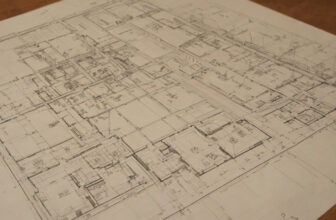
Project complexity is a better hiring test than project size alone shown with practical context cues.
Once project complexity and responsibility are clear, compare proposals by included scope rather than headline fee.
Compare residential design proposals by scope and risk, not headline fee
Fees cannot be compared reliably unless each proposal covers the same deliverables, assumptions and construction-stage involvement.
What should be included in an Australian residential design fee proposal?
- Design stages, named drawings, specifications and deliverables
- Included options, meetings, revisions, site visits and authority responses
- Fee basis, GST treatment, payment milestones and construction-cost assumptions
- Excluded surveys, engineering, planning advice, assessments and authority charges
- Named personnel and responsibility for coordinating external consultants
- Rates or calculation methods for additional services and changed instructions
How much does a draftsperson cost in Australia?
No single national figure provides a reliable answer. A useful quote identifies the location, project type, approval pathway, drawing package, GST treatment and date. Existing documentation, measured surveys, revisions and regulatory requirements can materially change the total. Compare the complete package, not an hourly or per-drawing rate in isolation.
Insurance, copyright and dispute terms should be checked before signing
Insurance requirements vary by profession and jurisdiction. Victorian architect registration, for example, requires professional indemnity insurance coverage under the framework described by the Architects Registration Board of Victoria. Request current evidence that applies to the proposed service.
The agreement should also address copyright, permitted use of drawings, variations, deposits, suspension, termination, liability terms and dispute resolution.
Compare residential design proposals by scope and risk, not headline fee shown with practical context cues.
A credential and scope checklist reduces the risk of appointing the wrong design professional
Verify the person who will perform and sign the work, not merely the business name.
Which questions should you ask an architect, building designer or draftsperson?
- Who will design, document, sign and lodge the work?
- Which registration and insurance apply to this jurisdiction, building class and service?
- Which comparable projects has the proposed team completed?
- How will authority requests, cost pressure, design changes and construction queries be managed?
- Which approvals, consultants and tasks remain the owner’s responsibility?
An architect practice profile or Australian architecture firm profile can support initial research, but neither replaces register, portfolio, insurance and contract checks.
Which warning signs indicate an unsuitable residential design appointment?
Warning signs include unverifiable credentials, unclear exclusions, verbal-only promises, missing insurance evidence and a mismatch between the registered practitioner and the person delivering the work. Treat approval guarantees cautiously because authorities assess project-specific applications.
The final choice should be recorded in a complete written agreement
The agreement should identify the project address, responsible people, scope, deliverables, programme, fees, payment stages, insurance, dispute process and termination rights. Add a responsibility matrix covering the owner, designer, builder, consultants, certifier and approval authorities. Appoint the practitioner only when verified credentials, relevant experience and written responsibilities align.
Frequently asked questions
What is the difference between a building designer and an architect in Australia?
An architect holds a protected, registered title. Building-designer licensing and permitted work vary between jurisdictions. Either professional may provide residential design services, but capability and accountability depend on experience, legal scope and the written appointment.
Is it better to use an architect or a draftsperson for a residential renovation?
An architect is generally better suited to unresolved design, planning constraints and extensive coordination. A draftsperson may suit a resolved design where another appropriately qualified party accepts responsibility for compliance and approvals.
How much does a draftsperson cost in Australia for house plans?
Costs depend on location, project complexity, existing information, approval requirements, revisions and the required drawing package. Obtain itemised quotes against one common brief rather than relying on a national average.
Can a building designer prepare and lodge council approval drawings in every Australian state?
Not automatically. The answer depends on local practitioner regulation, building classification, licence scope and the type of application. Preparation, signing, lodgement and approval may involve different parties.
Do you legally need an architect to design a house in Australia?
Not for every house. The required practitioner depends on the jurisdiction, building type and proposed work. Even where an architect is not mandatory, the appointed designer must have the legal authority, competence and contracted scope needed for the project.